
INFRASTRUCTURE
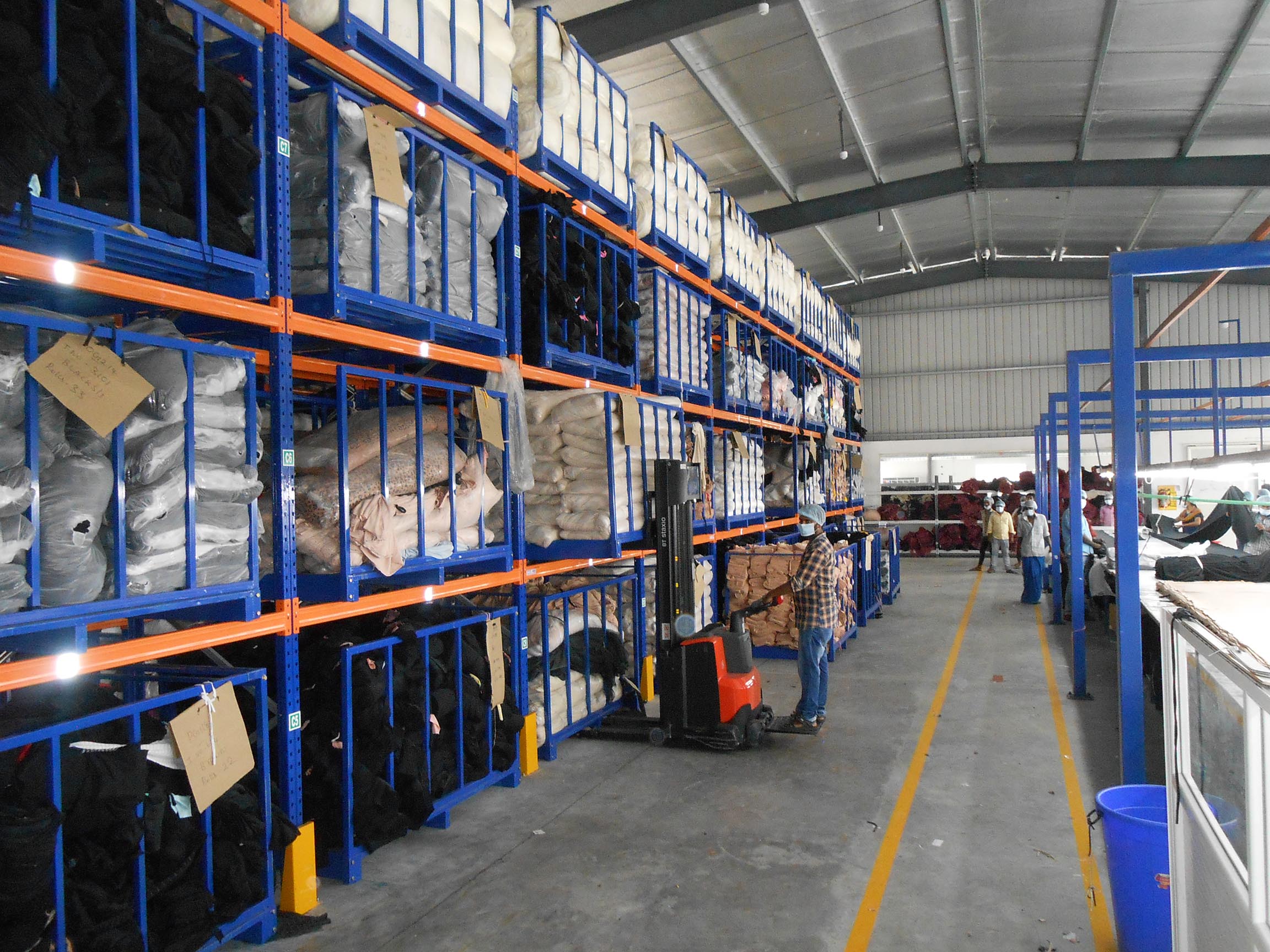
FABRIC STORAGE
Textile materials need to be properly cared and stored as they are exposed to heat, cold, humidity, fungus and insects. Different parts of the world have different climatic conditions. Hence, it is important to know the
basic guidelines of how and where to store the textile materials. Proper packing and storing of the material will elongate its life and protect it from deterioration.
Textile storage means the techniques that
take care of the materials by maintaining its original state and preserving it for the future. Many people like to preserve their special dresses for a lifetime but do not know the right technique of storage. It is
always advisable to take the help of a trained conservator if one is unsure about the way a material needs to be preserved.
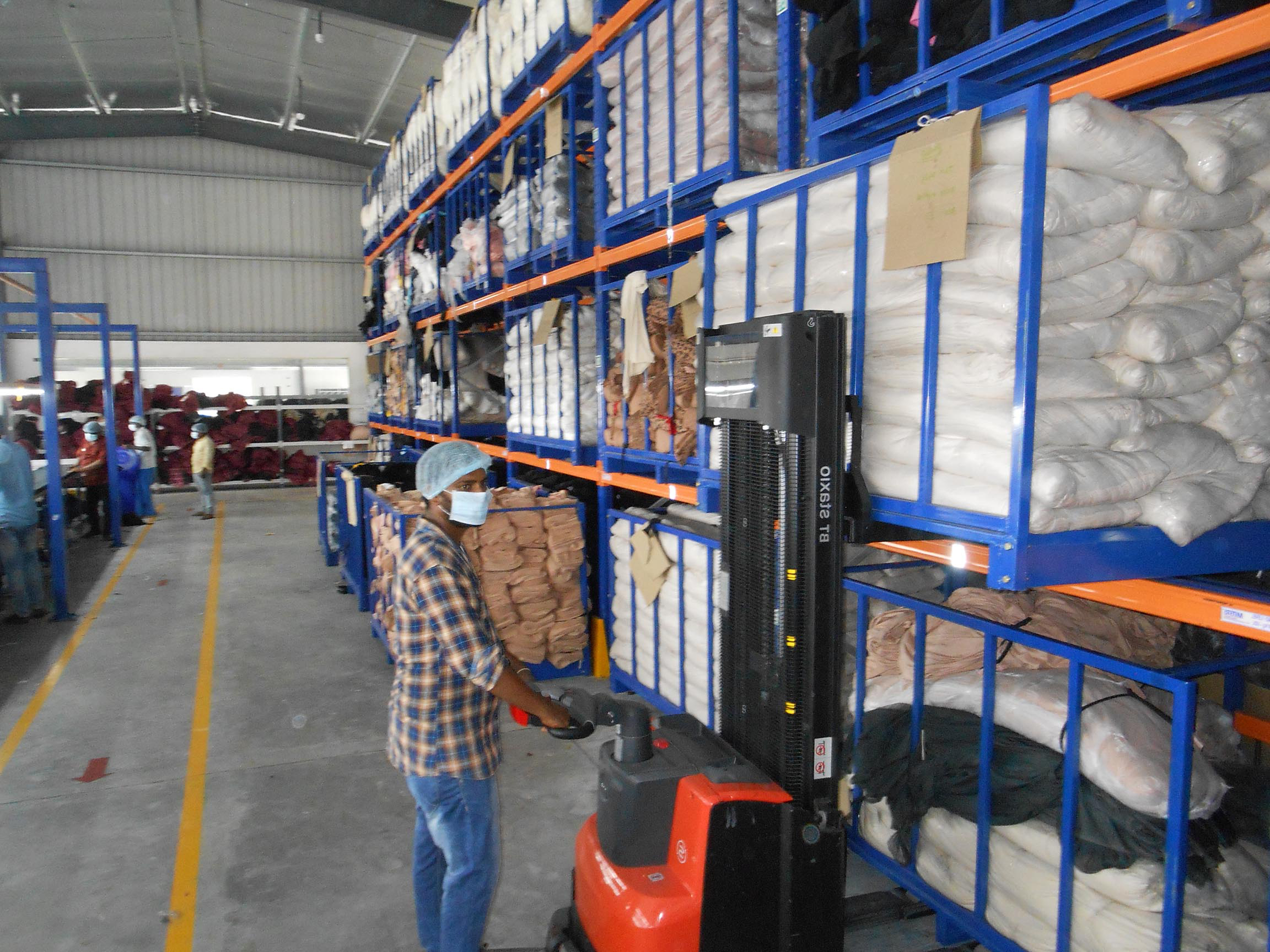
FORK LIFT
A typical warehouse dress code for forklift operators and other industrial workers should include both protective clothing and PPE accessories to shield a worker's eyes, face, feet, hands and head. In other words, warehouse
attire should literally shield your workers from head to toe.
Forklifts for Textile Industry comprises machines that come with lifting capacity from 1250 kg to 2000 kg and in lifting height of up to 7 meters.
The different operating configuration of forklifts makes these perfectly suit the specific needs of the customers. We make these available with power options of LPG, diesel, battery-operated in variations like truck-mounted
forklifts, sit-down forklifts, stand-on forklifts, material handling forklifts, walk-behind forklifts and others.
FABRIC CHECKING
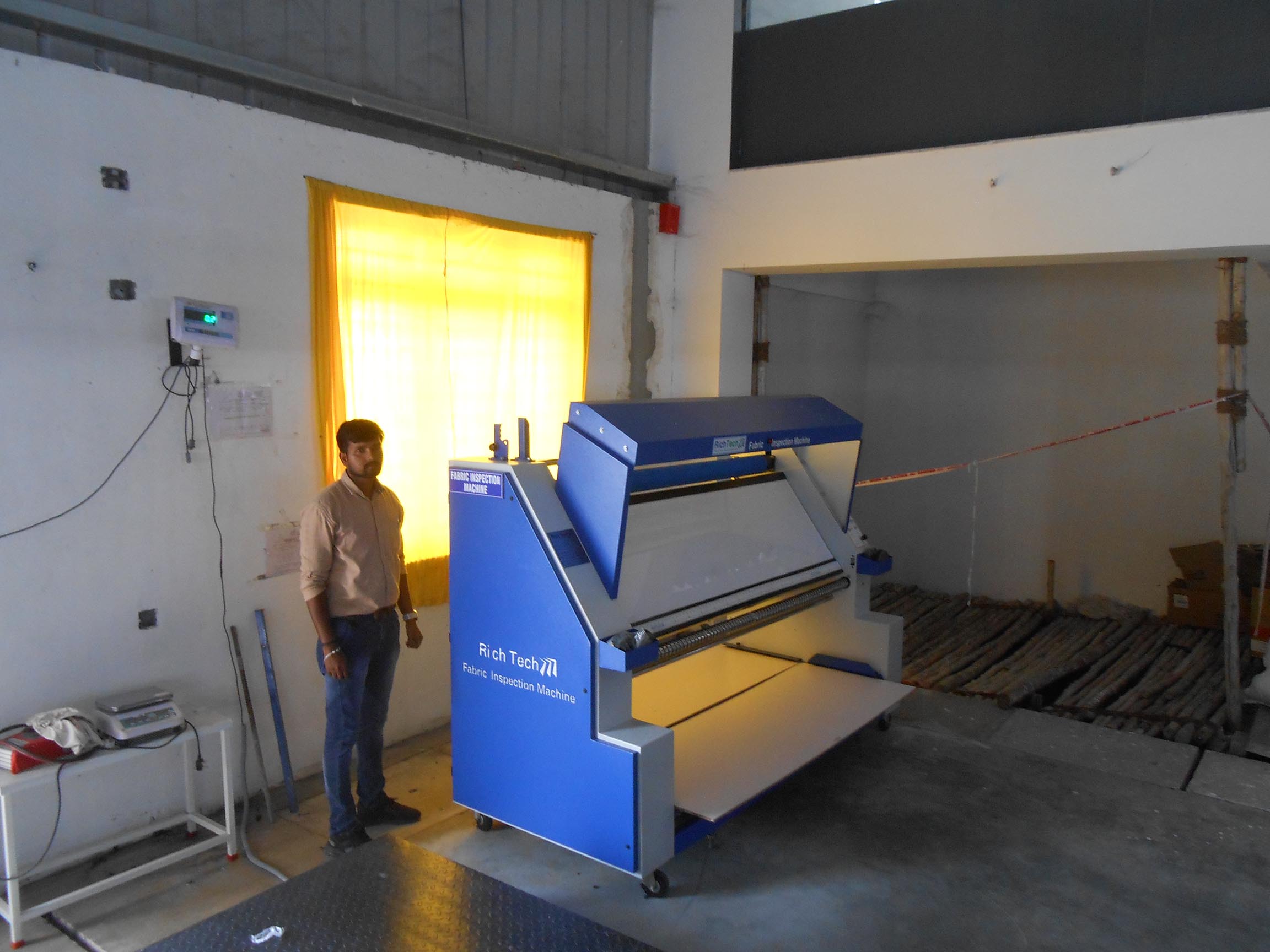
Fabric inspection is carried out by both fabric manufacturers and garment manufacturers. Fabric inspection is the process of checking the fabric sheet for detecting faults in the fabric and preparing an inspection report.
After the fabric inspection, grading of the fabric is done according to the fabric quality level.
Fabric inspection is carried out by both fabric manufacturers and garment manufacturers. Fabric inspection is
the process of checking the fabric sheet for detecting faults in the fabric and preparing an inspection report. After the fabric inspection, grading of the fabric is done according to the fabric quality level.
FABRIC CUTTING
Cutting is separating of the garment into its components and in a general form, it is the production process of separating (sectioning, curving, severing) a spread into garment parts that are the precise size and shape
of the pattern pieces on a marker.Cutting is separating of the garment into its components and in a general form, it is the production process of separating (sectioning, curving, severing) a spread into garment parts
that are the precise size and shape of the pattern pieces on a marker.
Cutting is the process which cut out the pattern pieces from specified fabric for making garments.Using the markers made from graded patterns
and in accordance with the issue plan, fabrics are cut to prepare garment assembly. This is the major operation of the cutting room, of all of the operations in the cutting room this is the most decisive because once
the fabric has been cut, very little can be done to rectify serious mistakes.
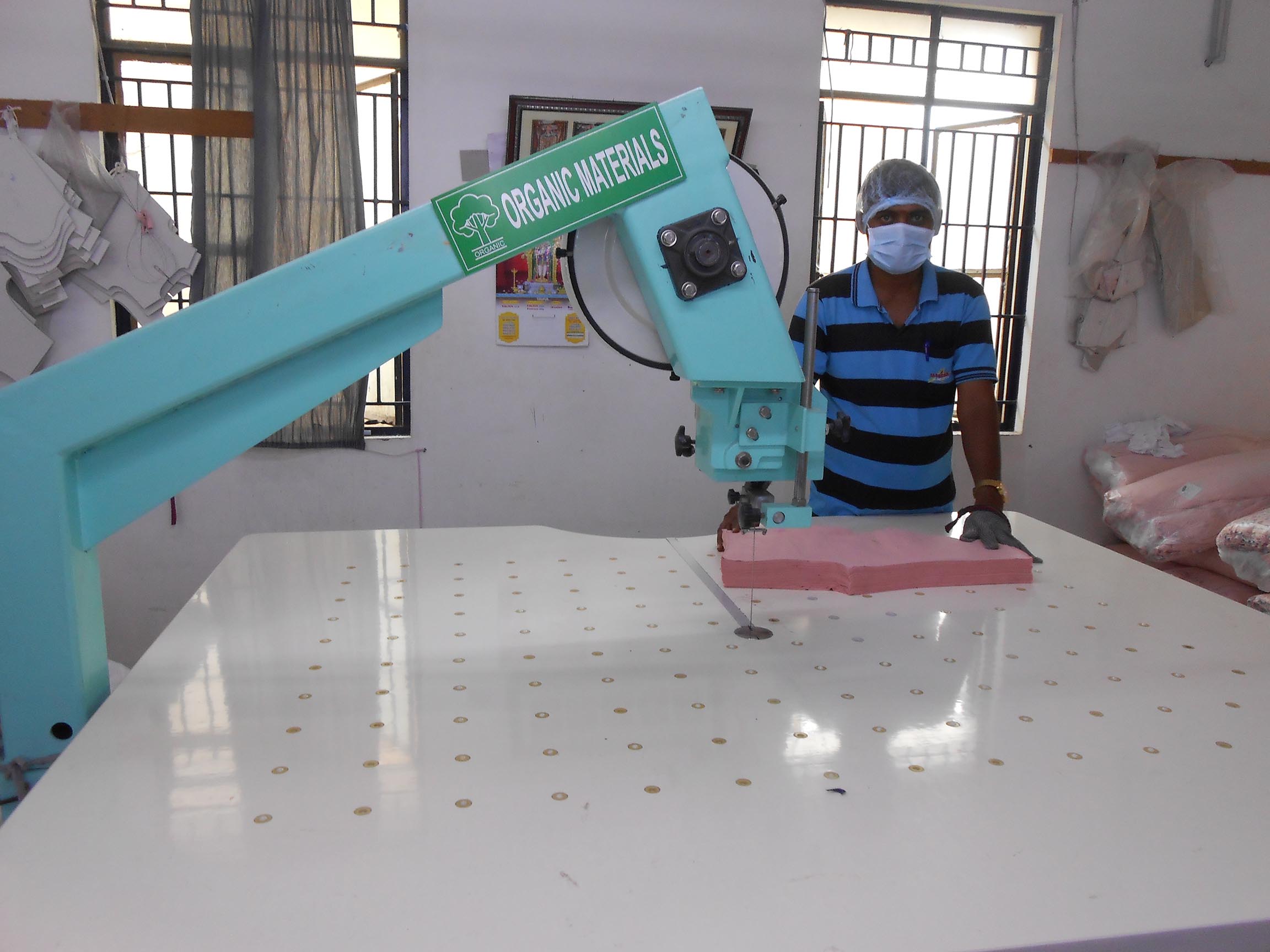
ORGANIC FABRIC CUTTING
Cutting being the first operation of garment manufacturing lays the foundation of quality of the garment to be made. Any imperfection in cutting process can result in non-conformance of the quality standards of all further
processe.
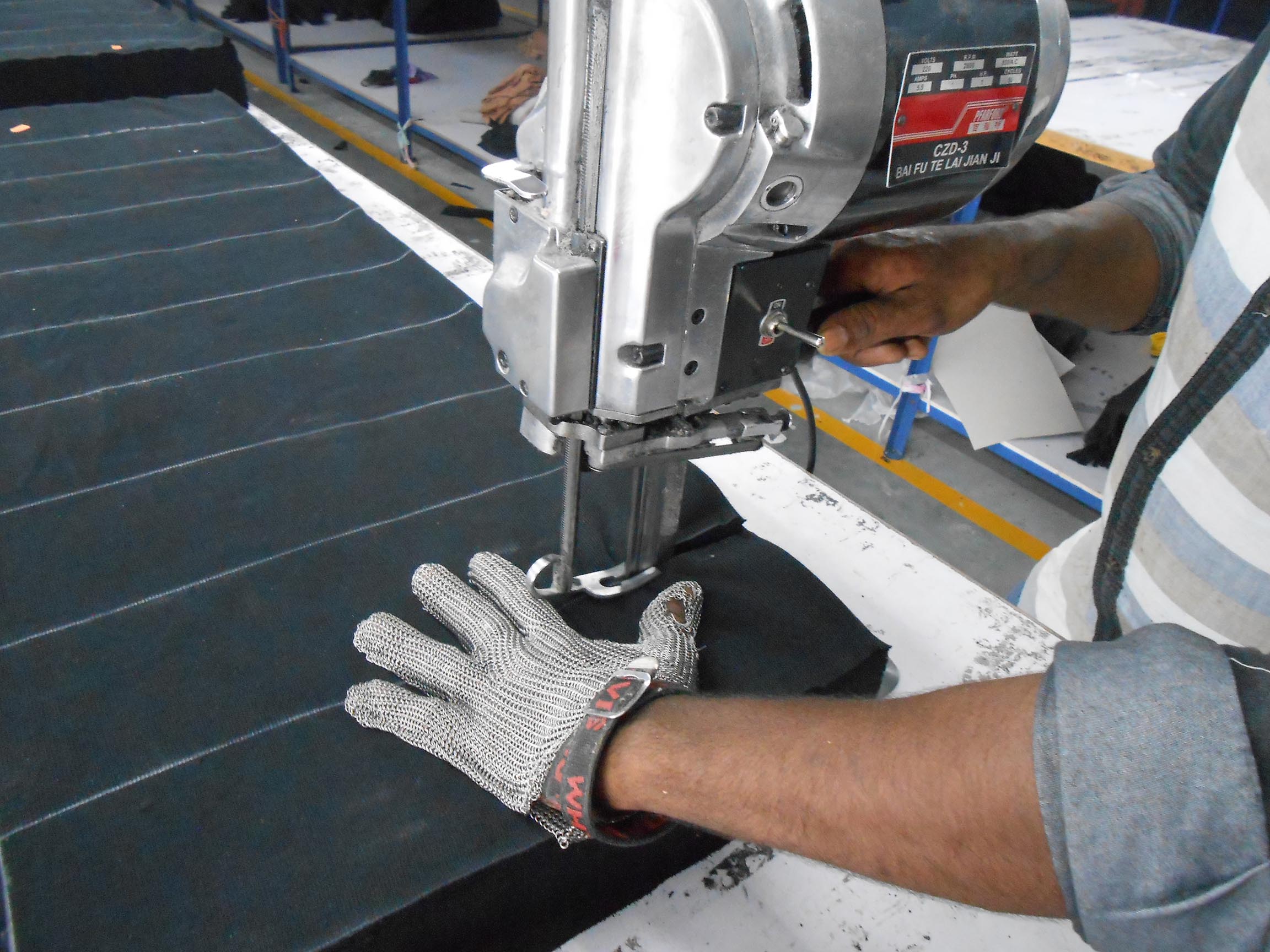
Cutting means cutting out the pieces of the garment from lays of the fabric with the help of a cutting template or marker. To make a complete garment, cutting is necessary.
SORTING CUT PANELS
Cut panel laundry (CPL) process is used in knits garment manufacturing. Mostly, locally processed (wet process, dyeing process) fabrics are not set correctly in its dimension.
When the fabrics are received from
the dyeing and finishing section, it needs to be checked, because, faulty fabrics can be supplied from dyeing and finishing. But the cutting section has to check it. Otherwise the end products will be faulty. For this,
the fabric is being inspected by the quality inspector of the cutting section. They check the fabric fully and find out the faults. Then mark it so that, these faulty portion of the fabric can be rejected during spreading
and cutting. Then the fabric is being stored for relaxation.
STICKERING CUT PANELS
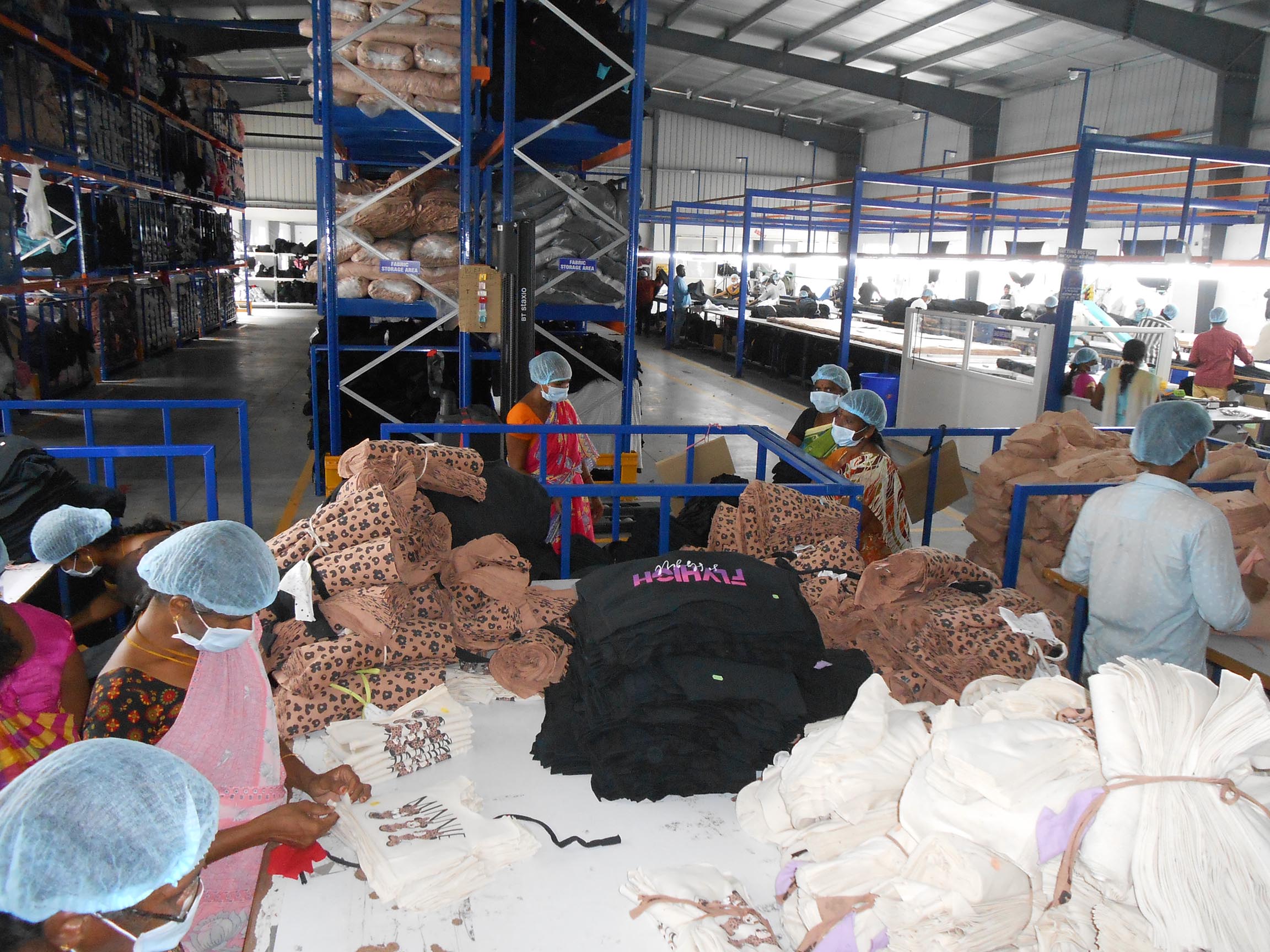
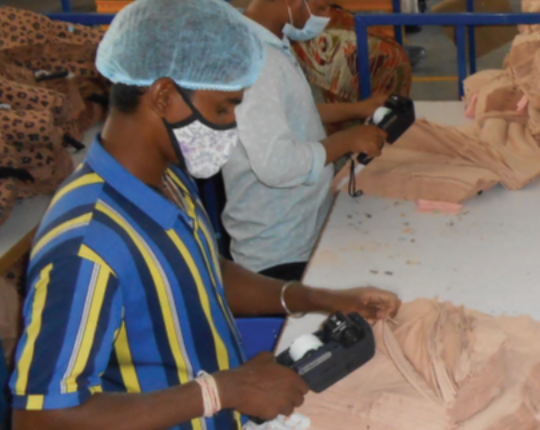
In the fabric cutting room, after cutting the garment panels, number marking is done to each layers and each garment component. The method used to stick a numbering sticker on the garment cut panels is known as stickering.
This stickering process is very common in the mass garment manufacturing industry.
In the fabric cutting room, after cutting the garment panels, number marking is done to each layers and each garment component.
The method used to stick a numbering sticker on the garment cut panels is known as stickering.
This stickering process is very common in the mass garment manufacturing industry. The stickers attached to the
panels help other departments to identify the order number, style number, size, fabric lot number of the garment from the serial number printed on the sticker.
RIB CUTTING
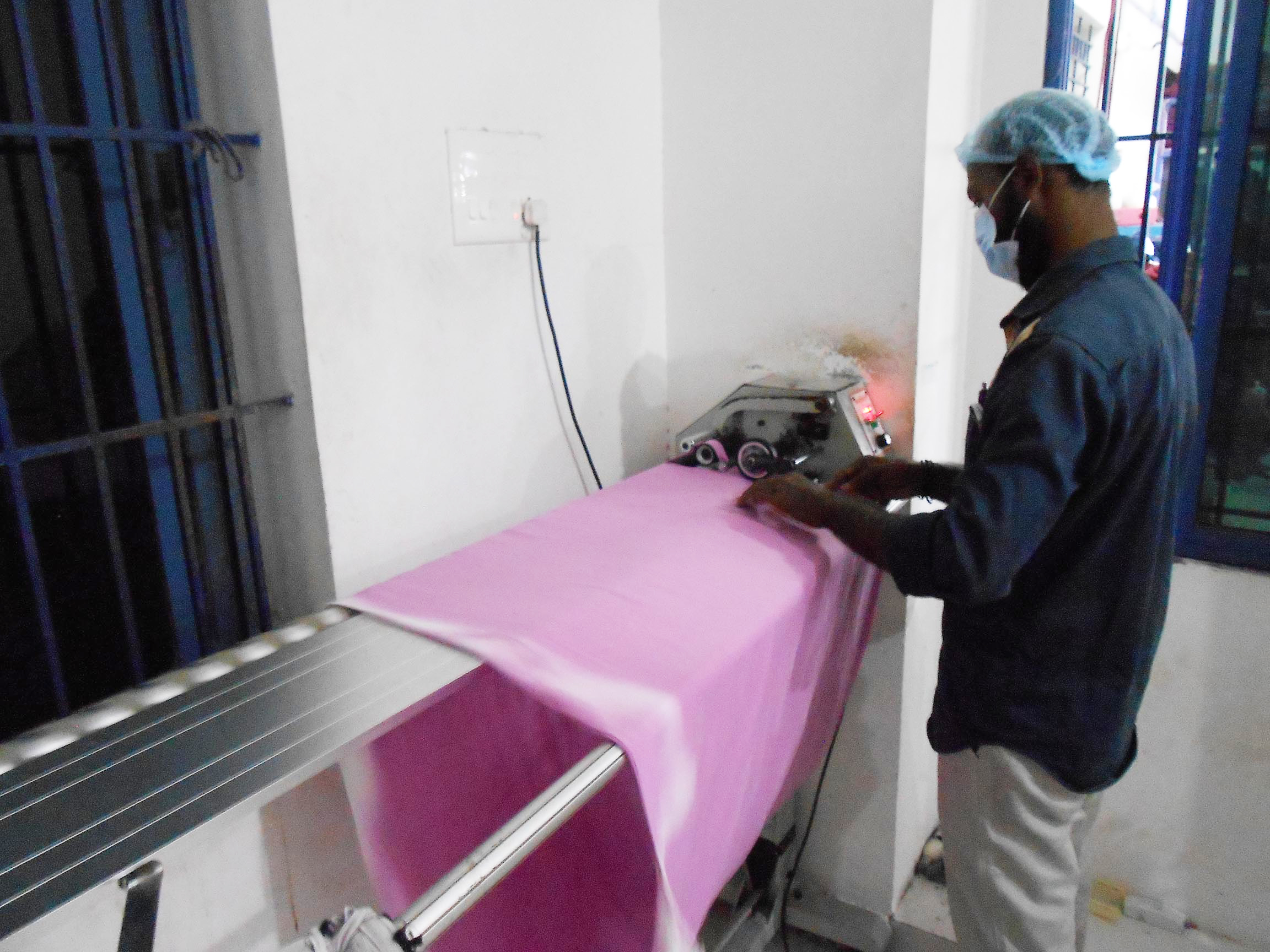
Ribs are one kind of knits fabric. Fabric ribs are normally attached to necks, sleeve hems, and bottom hem for binding. Maintaining an equal width of the rib is very important to produce the quality garment. This machine
is also called as a piping cutting machine. Ribs are one kind of knits fabric. Fabric ribs are normally attached to necks, sleeve hems, and bottom hem for binding. Maintaining an equal width of the rib is very important
to produce the quality garment. This machine is also called as a piping cutting machine.
A good look of the garment depends on the finish of the neckline. When factories cut ribs manually (using straight knife
cutting) they can’t make a roll of ribs and ribs are not continuous in length. It reduces the productivity of the machinist who operates rib attaching machine.
An automatic rib cutting machine helps to get the
roll of ribs. An operator needs to feed the cloth roll into the machine and specify the rib width. machine operator needs to guide the fabric. This machine cut fabric a specified width and winded up into a roll automatically.
STITCHING
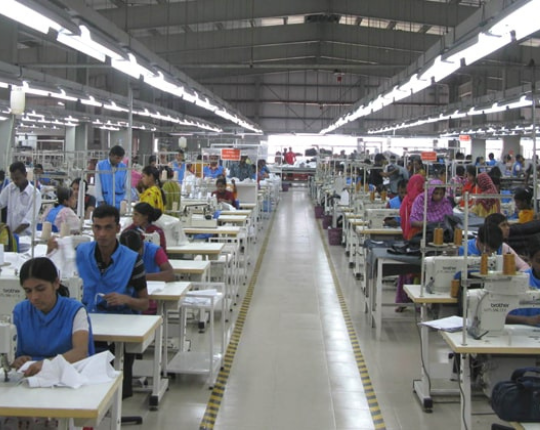
In the textile arts, a stitch is a single turn or loop of thread, or yarn. Stitches are the fundamental elements of sewing, knitting, embroidery, crochet, and needle lace-making, whether by hand or machine. A variety of
stitches, each with one or more names, are used for specific purposes.
A stitch is a Loops or loops of one or more threads when bound with each other, either by interlacing, interloping or intra-looping or
combination of those when sewing fabric and each unit of such configuration is considered as a stitch. In this article, we will share details of different types of stitch used in garments sewing.
PRINTING
Printing is a process of decorating textile fabrics by application of pigments, dyes, or other related materials in the form of patterns. Although apparently developed from the hand painting of fabrics, such methods are
also of great antiquity.
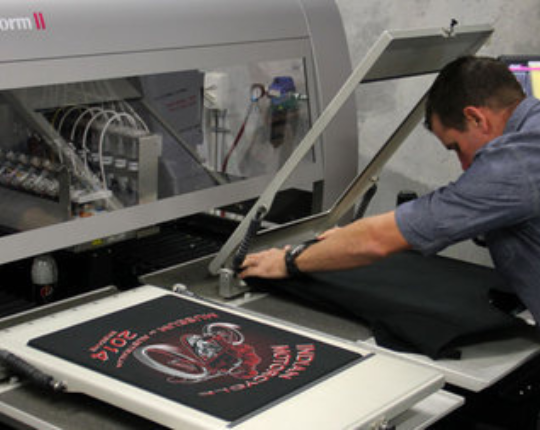
Printing is a process of decorating textile fabrics by application of pigments, dyes, or other related materials in the form of patterns. Although apparently developed from the hand
painting of fabrics, such methods are also of great antiquity. Textile printing has become highly sophisticated and has involved the skills of many artists and designers.
CHECKING
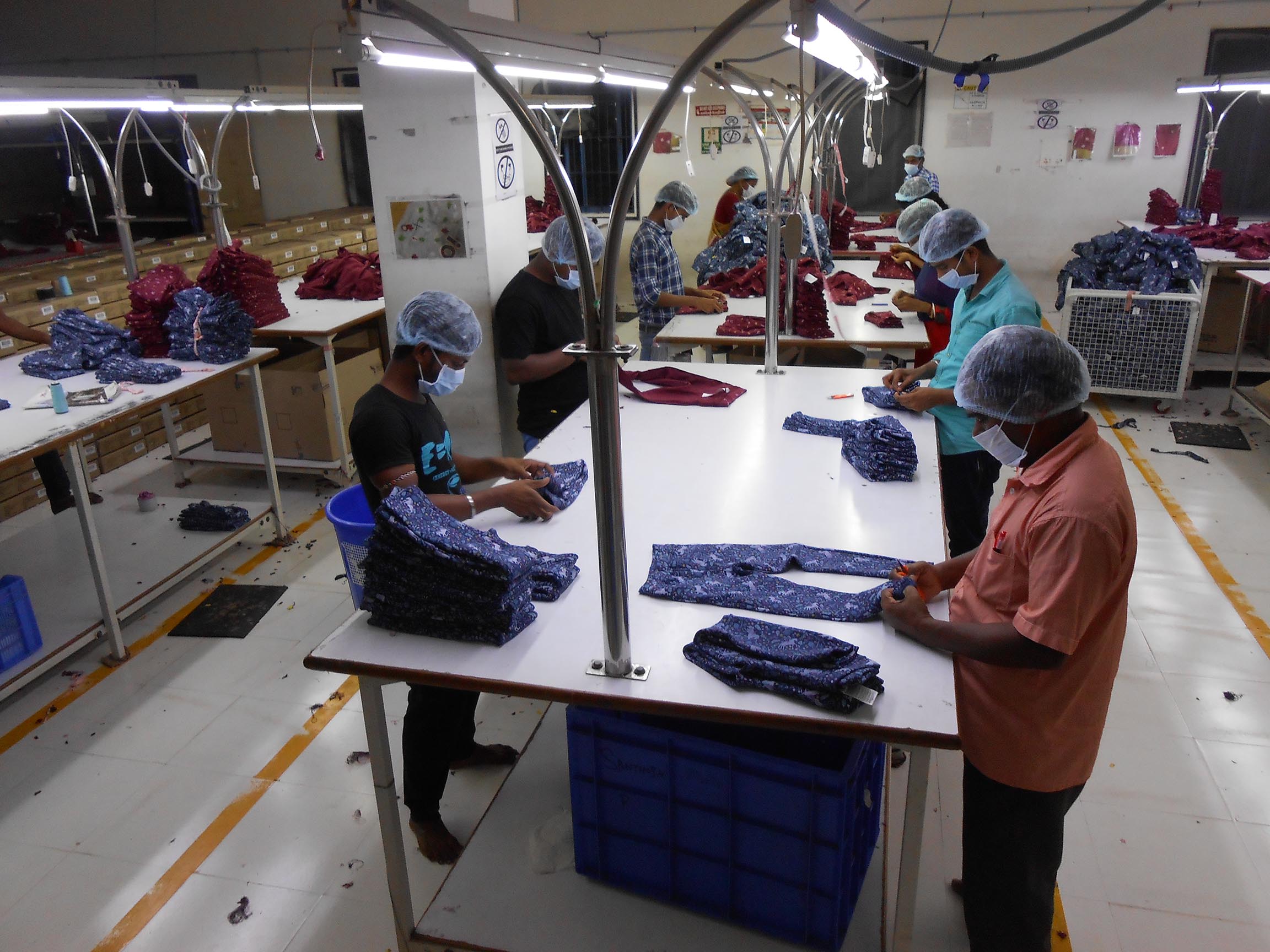
Clothing manufacturer has a specific standard of checking to properly ensure the garment quality. This process is done to minimize the percentage of garments rejected by customers. During the step of checking, workers can
spot any stans, cosmetic flaws or spots on the garments due to the cutting and sewing process.
Textile quality refers to the sum of various properties of textiles that meet the needs of people for use or further
processing. Textiles have many properties, but only the properties which related to use constitute their quality. The use of textiles determines the conditions for their use, such as atmospheric composition, temperature
and humidity of air, temperature and moisture regain of the fabric itself, radiation intensity of the sun, the degree of washing, the personality of the wearer (age, working activity, personal habits) and other conditions.
IRONING
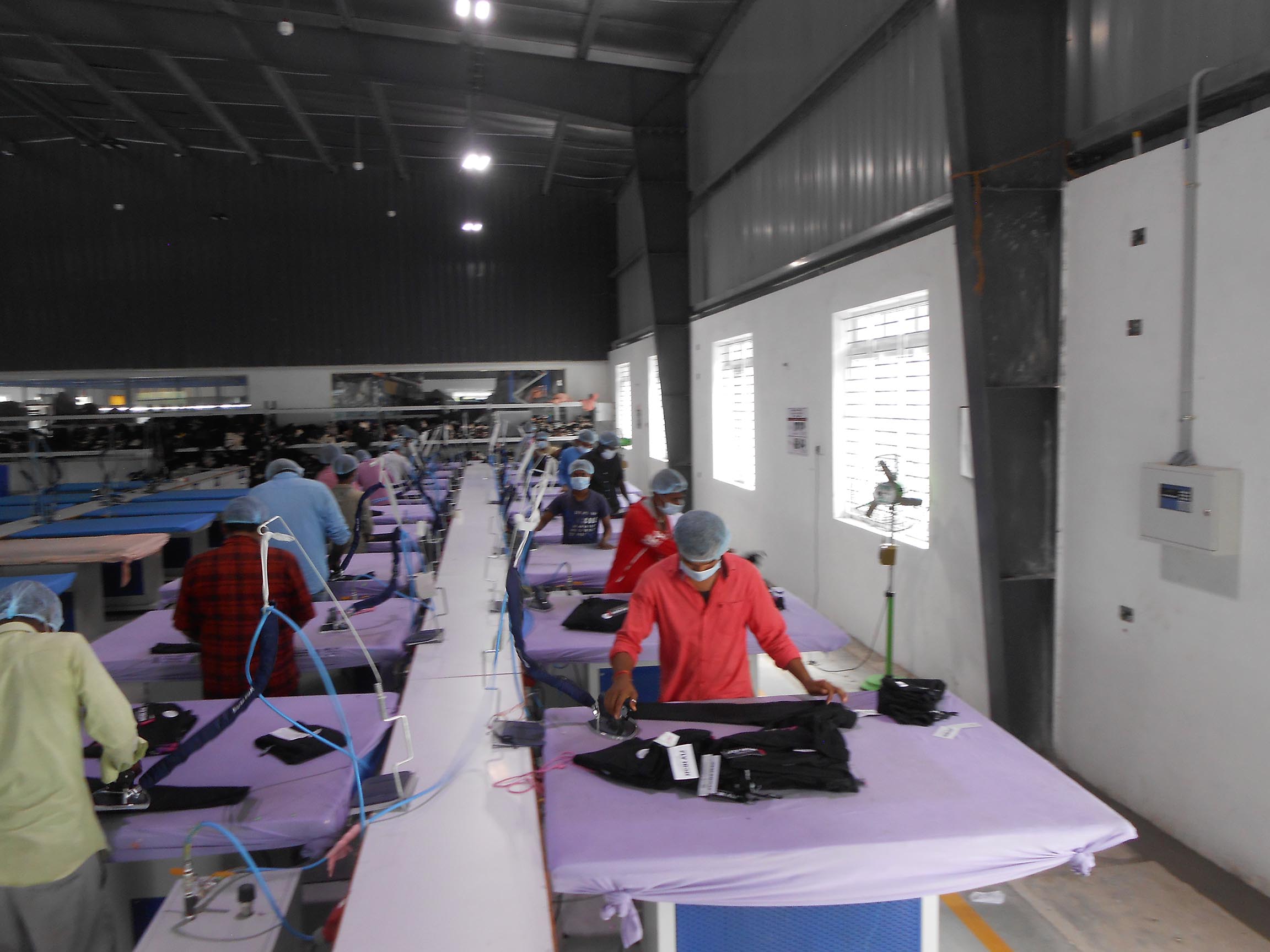
Pressing or ironing is the most important finishing process in the readymade garments sector which is done by subjecting a cloth to heat and pressure with or without steam to remove unwanted creases and to impart a flat appearance to the garments.To complete sewing easily and beautifully, it must require to give minimum ironing to some parts of garments before sewing is called under pressing. Especially under pressing is done to most of the apparel industries for making a coat, jacket, and trousers and so on. For example, where there is needed for doing a crease effect to the parts of garments done by pressing before sewing.
METAL DEDUCTION
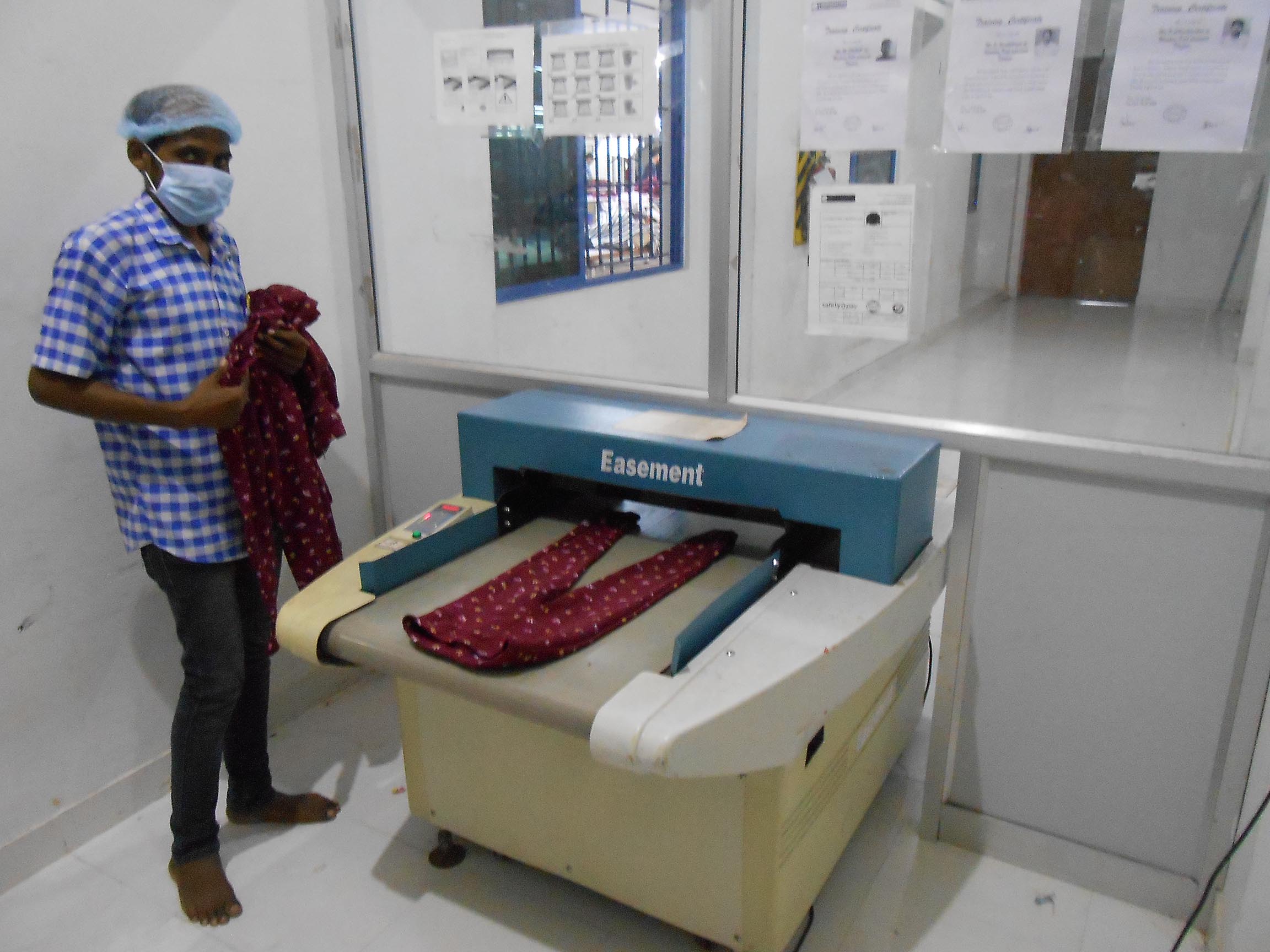
In the garment and apparel industry, metal detecting devices are utilised to detect needles that may have been accidentally lodged in finished garments. It is also necessary to ensure that garments and apparels meant to
be sold or exported are devoid of all sort of metal contaminants.In the garment and apparel industry, metal detecting devices are utilised to detect needles that may have been accidentally lodged in finished garments.
It is also necessary to ensure that garments and apparels meant to be sold or exported are devoid of all sort of metal contaminants.
Tunnel conveyor metal detecting is the most effective detection system and
buyer recommends their use for all apparel. Hand-held and static metal detectors are only acceptable for locating a metal fragment when there is knowledge or suspicion of its presence. There are only two types of tunnel
conveyor metal detectors.
TAGGING & LABEL ATTACH
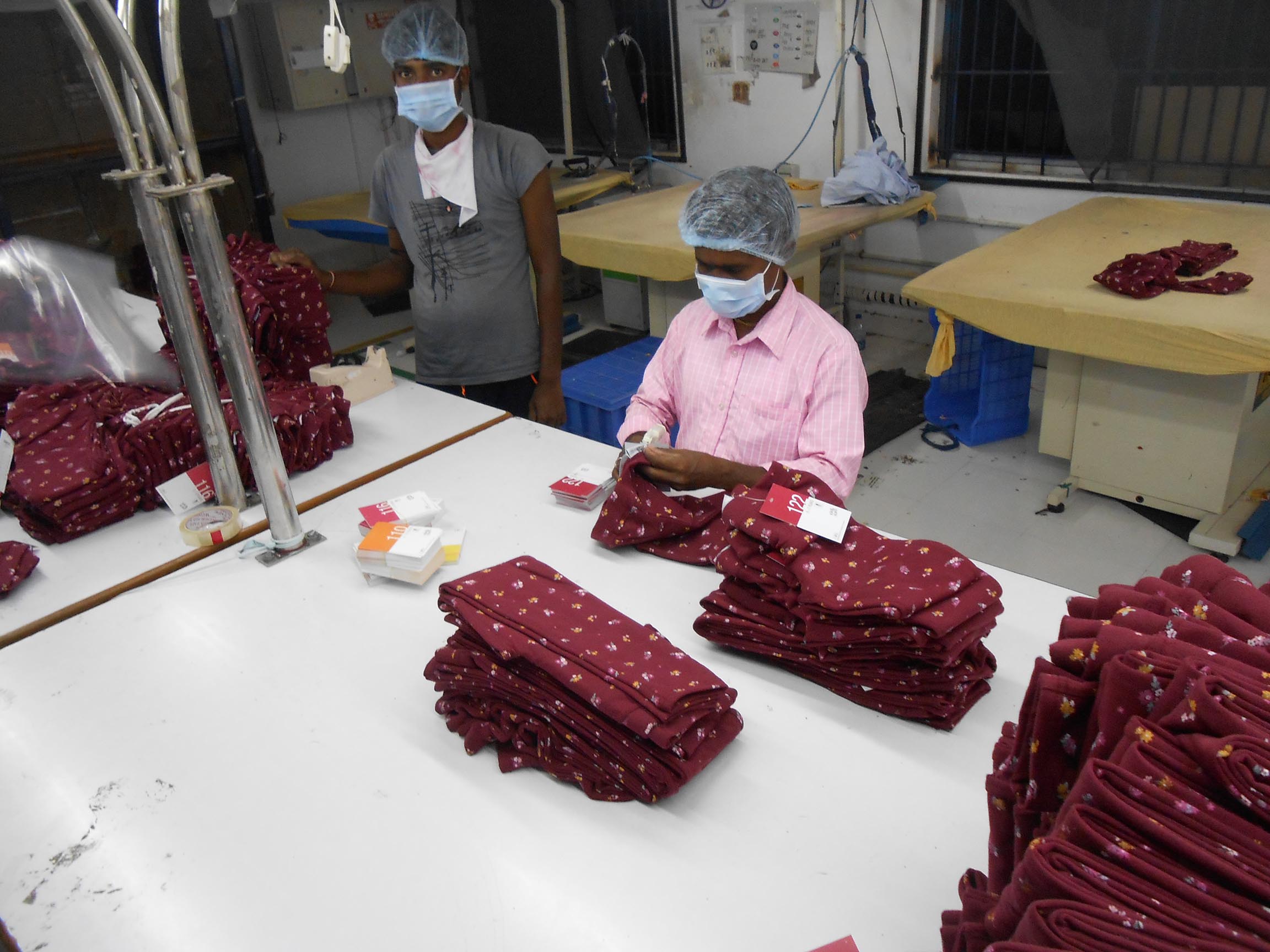
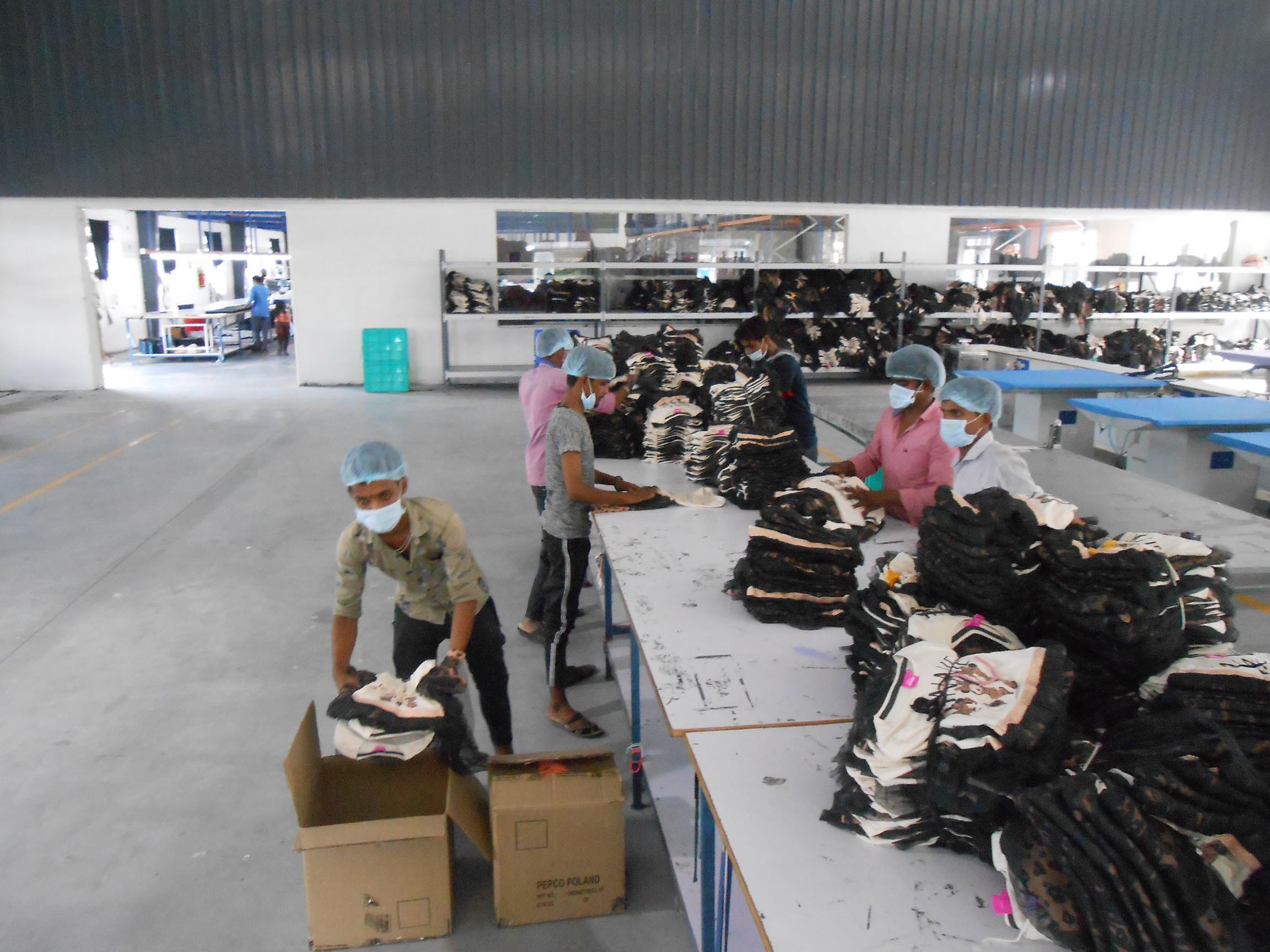
While the garment label requirements of different countries are similar in that these regulations are all in place for consumer protection purposes, there are some important differences between these requirements that you'll need to know about if you want to sell clothing or household textile items internationally. Garment labeling isn’t new in clothing production, but it is something to consider.
PACKING
QUALITY CHECK
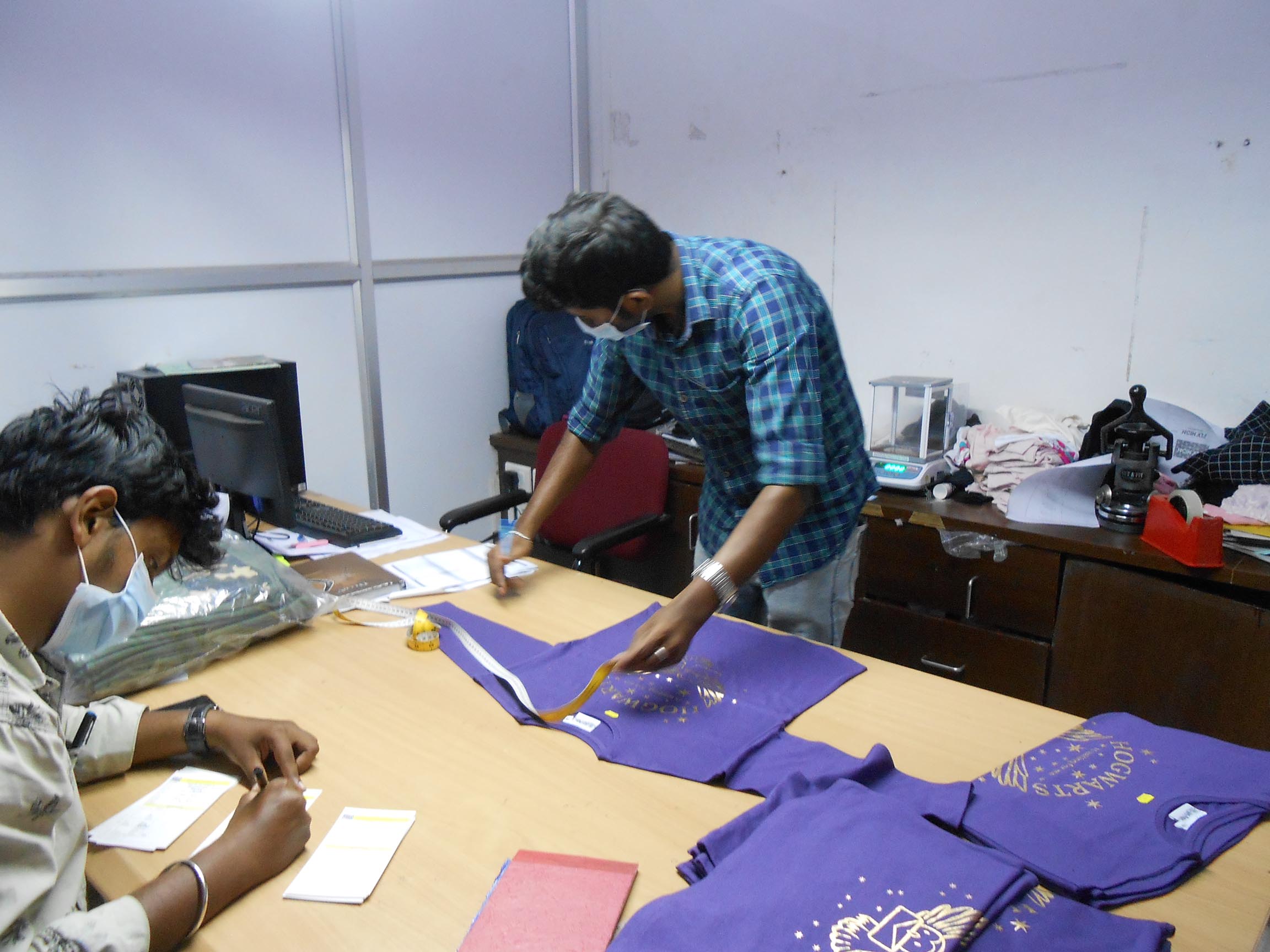
Define quality control check points to be used for testing the product quality at any point in the production process. Quality Control Point is a point or stage of manufacturing where it is essential to control (reduce
or eliminate) a risk to avoid downtime.
A garment quality control checklist is a document used by textile manufacturers and suppliers that clearly outlines product specifications and quality requirements for
a particular product. The garment quality control checklist should be drawn up before production begins, and then used on-site as a reference guide for the manufacturer and supplier throughout the production. The quality
control list can also be referred to as an inspection criteria sheet (ICS), a QC checklist, a quality assurance checklist, or quality control sheet.
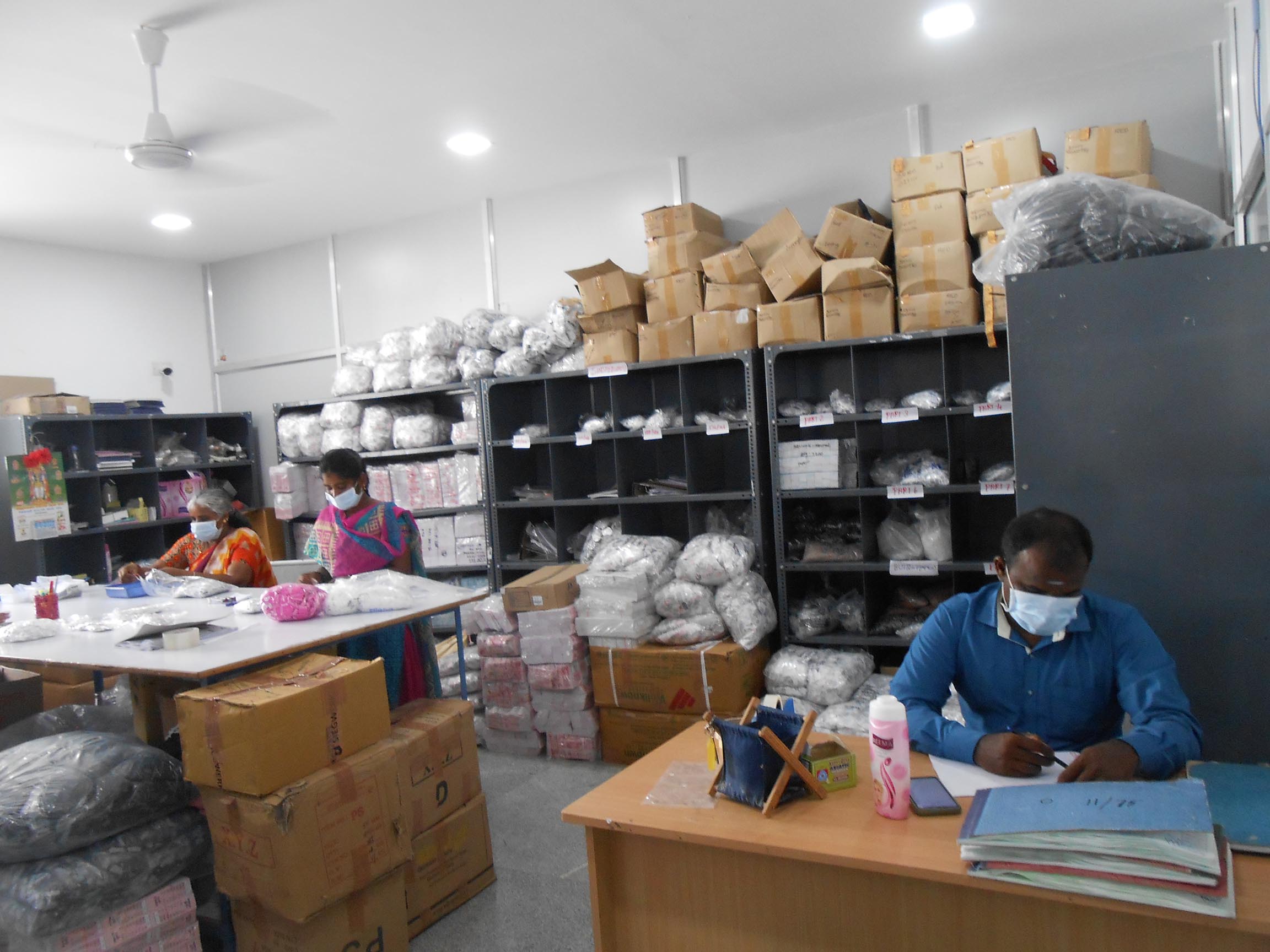
ACCESSORIES & STORE
Most important in all aspects of a business. Consumers need and expect value for money. As garment manufacturers, we should always strive for good work. “Systems are needed to program and coordinate the efforts of different groups in an organization to maintain optimal quality.” Because quality control is considered representative of quality assurance or full quality control.