
RO PLANT
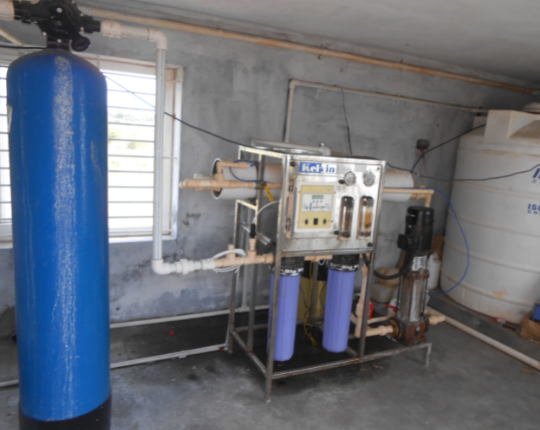
RO PLANT
The reverse osmosis process works by utilizing high pressure pumps to elevate the pressure on the concentrated side of the RO system and push the water through membrane(s). It is a highly effective water treatment process that
needs a higher degree of pressure depending on the total amount of contaminants existing in the feed water. The purified water that is removed of its dissolved solids is now referred to as permeate or product water. The
concentrated stream of contaminants left behind in the brine is referred to as reject water and is ultimately discharged.
The reverse osmosis process is more similar to a cross-flow filtration method than a conventional
one. Cross-flow filtration is more effective since it consists of two outlets for the solution to go in order to handle higher concentrations of pollutants. The flow of the permeate and concentrated water in opposite directions
allows the membrane surface to remain clean and greatly minimizes buildup. This filtration method ensures a longer-life span of the system and components and reduced the need for membrane cleaning.